
Farmer representatives and agricultural stakeholders urged the government to provide cheaper long-term credit, implement lower taxes, and double the PM-KISAN income support during a comprehensive pre-budget consultation with Finance Minister Nirmala Sitharaman on Saturday. The two-hour meeting saw a detailed discussion of proposals, aimed at addressing multiple challenges in the agricultural sector, with key demands focusing on financial relief, market reforms, and strategic investments.

Finance Minister Nirmala Sitharaman on Saturday said India is looking for a "good" trade agreement with the US to promote economic growth and ensure smooth supply chains. She also said that amid a growing global tariff war, India will have to move "smartly" to guard against possible dumping of goods from countries that are facing higher US tariffs.

The government on Tuesday announced setting up of hubs to promote exports through e-commerce medium in public-private-partnership (PPP) mode and initially 10-15 hubs will be established. Finance Minister Nirmala Sitharaman said that these hubs, under a seamless regulatory and logistic framework, will facilitate trade and export-related services under one roof. "To enable MSMEs (micro, small and medium enterprises) and traditional artisans to sell their products in international markets, e-commerce export hubs will be set up in PPP mode," she said.

Wholesale price inflation marginally rose to 2.38 per cent in February due to expensive manufactured food items like vegetables oil and beverages, government data released on Monday showed. The Wholesale Price Index (WPI) based inflation was 2.31 per cent in January. It was 0.2 per cent in February 2024.

eclined for the third month in a row in January, falling by 2.38 per cent year-on-year to $36.43 billion, while the trade deficit widened to $22.99 billion in the month. Imports rose by 10.28 per cent year-on-year to $59.42 billion in January due to an increase gold shipments, according to the Commerce Ministry data. The trade deficit was $21.94 billion in December and $16.55 billion in January last year.

The government is expediting visa-related issues to bring technicians to India from any country, not just China, as and when required, to ensure the smooth implementation of the flagship production-linked incentive (PLI) scheme aimed at boosting domestic manufacturing. "If those under the PLI scheme need to get their equipment installed, we try to expedite the ability to get technicians into India from any country, whichever it may be," Union Commerce and Industry Minister Piyush Goyal told Business Standard in an interview.
.jpg)
The ministry has been receiving representations from chambers of commerce and industry associations on tax-related issues and disputes that affect the industry as a whole or impact a large sections of the industry.

The government's initiative to migrate SEZ data from NSDL software to ICEGATE system for streamlined reporting of import data caused double counting of gold imports, resulting in inflated figures and the issue has now been largely rectified, government sources said. The downward revision has provided the actual picture of trade deficit (difference between imports and exports), which was earlier looking very high. The deficit for November will now be revised downwards from $37.84 billion to about $32.8 billion. Similarly, there will be a revision in overall import numbers as well.

In 2023, the share of US electronics imports from India was a mere 1.9 per cent of the $520 billion they imported, while the total Indian electronics exports to the US was pegged at only $10 billion.

Among key guidelines, the e-commerce companies will also be required to ensure that personally identifiable information of customers are protected.

This will be the first full-year Budget of the BJP-led National Democratic Alliance government since it came to power for a third consecutive term in July last year.

The government has revised gold import data, bringing down numbers for November by $5 billion to $9.84 billion, possibly to rectify double accounting of inbound shipments. According to revised data of the commerce ministry arm Directorate General of Commercial Intelligence and Statistics (DGCIS), gold import numbers have been slashed since April 2024, revealing excess imports of about $11.7 billion during the first eight months of 2024-25.

The "construct of the DPDP Act" cannot be changed at this stage, though there may be some minor tweaks in the language of the Rules and formats in certain legitimate cases.

India and the United States will finalize the contours, schedule of negotiations, and terms of reference for a proposed bilateral trade agreement (BTA) during a three-day meeting beginning Tuesday. The agreement is expected to be finalized in two tranches, with the first phase focusing on goods trade. The US team, led by Assistant US Trade Representative for South and Central Asia Brendan Lynch, will be in India from March 25-29 to discuss the agreement. Both countries are aiming to conclude the first phase of the agreement by fall 2025.

Seasoned bureaucrat and a stickler for rules Finance Secretary Tuhin Kanta Pandey will be at the helm of capital market regulator, Securities and Exchange Board of India (SEBI), for three years. The 1987-batch Odisha-cadre Indian Administrative Service (IAS) officer, Pandey, would replace Madhabi Puri Buch, whose three-year term ends on Friday.
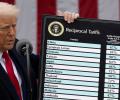
US President Donald Trump has proposed a deal to China that would see the sale of TikTok's US operations to an American buyer in exchange for a reduction in tariffs on Chinese exports to the US. The proposal comes amid a trade war between the two countries and follows China's retaliation of Trump's tariffs on Chinese goods. Trump has also said that tariffs are a powerful economic tool and that he is determined to ensure fair trade between the US and China.

The finance minister, in her Budget speech, should focus more on what she is directly responsible for, rather than on programmes where her role is largely supportive, notes Nitin Desai.

Here is a list of Q & As to explain these issues and implications of the US move.

The final policy may be out only after formation of the new government, according to sources

'We are getting to understand the mind of this generation.' 'Minor tweaks are being made to ease the process as we go along.'

The wholesale price inflation rose to 1.84 per cent in September as food items, especially vegetables, turned costlier, as per the government data released on Monday. The wholesale price index (WPI)-based inflation was 1.31 per cent in August. It was (-)0.07 per cent in September last year.

Govt's e-commerce portal asks sellers to specify country origin of products. Now, the commerce & industry ministry has mandated that the Government e-Marketplace, which has seen Rs 55,048 crore worth of transactions till now, adopt this approach in the interest of creating an 'Aatmanirbhar Bharat'.

China on Tuesday retaliated US President Donald Trump's imposition of 2nd round of ten per cent tariffs on its export by slapping an additional 15 per cent tariffs on American goods and initiated legal action against Washington in WTO while leaving the door open for talks to address each other's concerns.

The Ministry of Mines has directed the Geological Survey of India (GSI) to conduct a re-exploration of the 5.9 million tonnes of lithium block in Jammu and Kashmir's (J&K's) Reasi district after repeated setbacks to put the reserve up for auction again in six months.

The draft favoured up to 49 per cent foreign equity in inventory model in the case of 100 per cent made in India products sold through Indian management-controlled platforms with resident Indian founders/promoters.
According to CAIT, e-commerce policy should take within its ambit not only foreign players but also domestic ones.

Foreign direct investment (FDI) inflows into India have crossed the $1 trillion milestone in the April 2000-September 2024 period, firmly establishing the country's reputation as a safe and key investment destination globally. According to data from the Department for Promotion of Industry and Internal Trade (DPIIT), the cumulative amount of FDI, including equity, reinvested earnings and other capital, stood at $1,033.40 billion during the said period.

Gold imports more than doubled in August to a record high of $10.06 billion, mainly on account of a drastic cut in customs duty and ongoing festive demand, according to the Commerce Ministry data. Gold imports stood at $4.93 billion in August 2023. On record high imports, Commerce Secretary Sunil Barthwal said that the tariff rates on gold have been reduced drastically so that smuggling and other activities can come down.

The MHA on Friday, while extending the lockdown for two more weeks till May 17, lifted many restrictions in green and orange zones. There are no restrictions on sale of non-essential items by e-commerce platforms in green and orange zones, a home ministry spokesperson said, adding barber shops and salons are also allowed to open in these areas.

Smaller Singapore- and US-based venture capital funds, retail associations and trader bodies such as the CAIT and SJM are all planning to approach the government to put pressure on the commerce ministry.
'The US is strongly placed to expand its crude supplies to India.'

Wholesale price inflation rose to a 4-month high of 2.36 per cent in October as prices of food items, especially vegetables, and manufactured goods turned dearer, as per the government data released on Thursday. The wholesale price index (WPI) based inflation was 1.84 per cent in September 2024. It was (-) 0.26 per cent in October, last year.

The Centre on Monday proposed amendments to the Consumer Protection (E-Commerce) Rules, 2020 and sought public comments on banning mis-selling and fraudulent flash sale of goods and services on e-commerce platforms, and also on making registration of these entities mandatory with DPIIT. Ban on misleading users by manipulating search results, appointment of chief compliance officer and resident grievance officer are some of the other amendments being proposed. The Consumer Protection (E-Commerce) Rules, 2020 were first notified in July last year.
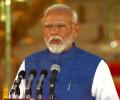
Here is the complete list of ministers in Modi 3.0 and their portfolios:
Government's decision comes in the backdrop of several complaints being flagged by domestic traders on heavy discounts being given by e-commerce players to consumers.
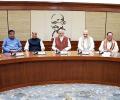
Among the new entrants to the Union cabinet, former Madhya Pradesh chief minister Shivraj Singh Chouhan has been given the agriculture and rural development portfolios, Bharatiya Janata Party president J P Nadda the health portfolio and former Haryana chief minister Manohar Lal Khattar the power portfolio.

We need to equip the Indian Armed Forces, not 'commercial' as Trump wants, but 'operationally' looking at growing Chinese military capabilities, asserts Lieutenant General Prakash Katoch (retd).

What stood out in his 15-year journey as a member of the political executive at the Centre was his glowing record as India's most successful and effective finance minister. Both as prime minister and finance minister, he understood the importance of gradualism, except when the economy or the polity was in a crisis.
The biggest fear many of the e-commerce firms have is the possible requirement to change business models overnight, which would drastically increase costs as well as disrupt businesses.

Eying benefits from digital banking, lenders are now looking at building Unified Recovery Interface (URI) for enhancing efficiency, reducing costs, and getting good prices for properties of defaulters. This would be managed by PSB Alliance Ltd, a company set up by all public sector banks in the country. M V Rao, chairman, Indian Banks' Association (IBA), said: "Till now we had Unified Payments Interface (UPI), a product developed by National Payments Corporation Ltd (NPCI).
